Solar array
PV modules turn daylight into DC power, then combine it before supplying the site or charging storage.
- PV cells
- DC combiner
- Site bus

Low-bandwidth view
PV modules turn daylight into DC power, then combine it before supplying the site or charging storage.
The rotor drives a generator, while power descends through the tower cable and joins the site bus.
Battery modules are monitored by the BMS. The PCS reverses power flow as supply and demand change.
Site distribution routes available power into production equipment and building demand throughout the day.
Energy equipment keeps operating.Management data needs to stay visible.
Meters, sensors, and existing systemsoften use different data formats.
Equipment and points require an inventory.Connectivity follows the site's current setup.
Once a system is in place,monitoring, alerts, and reporting share a basis.
Analysis and automationcan be added when they are needed.
Field photos and video show site layouts, equipment positions, and maintenance access for assessing integration conditions.
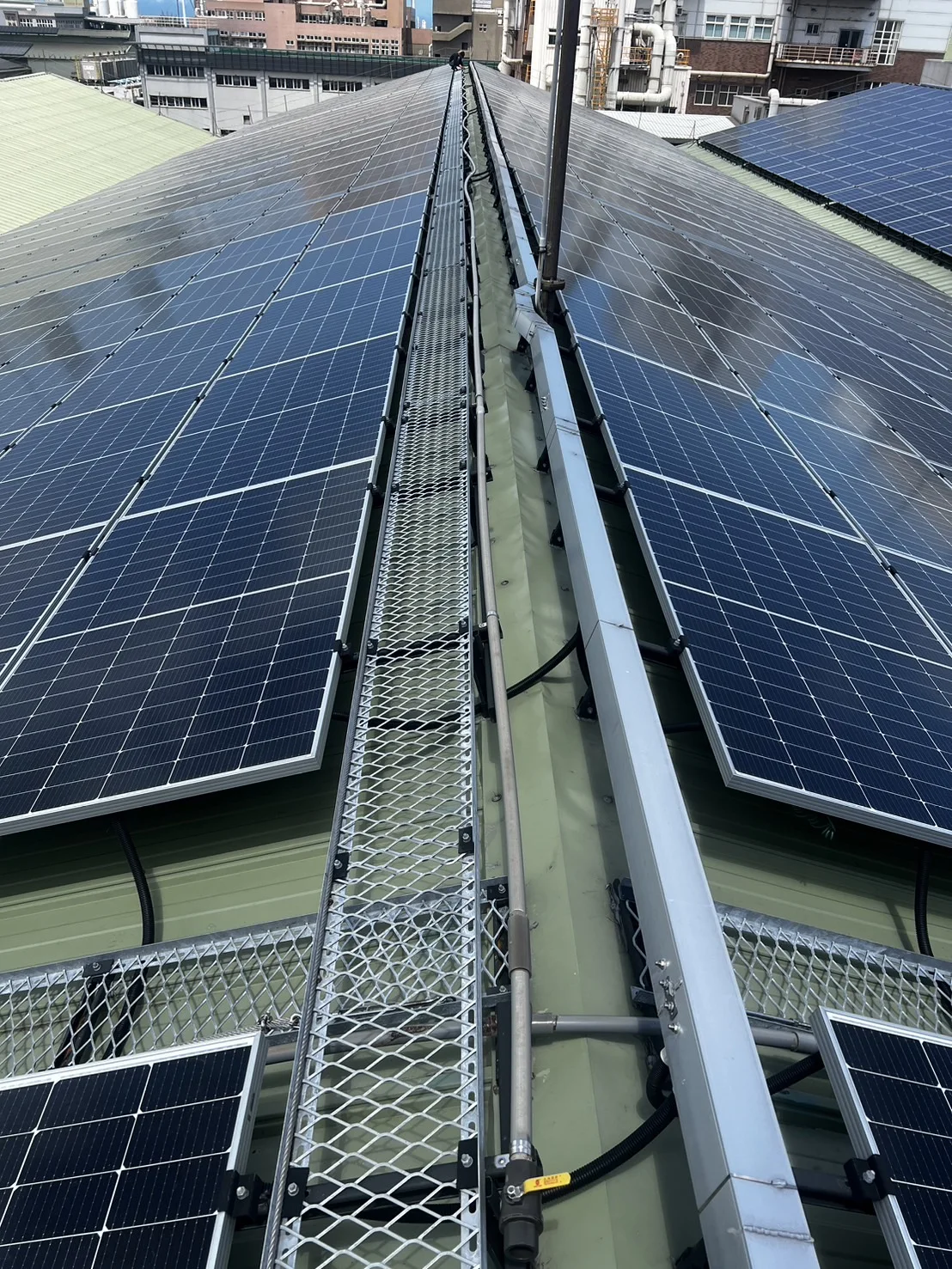
A 996 kW industrial rooftop solar site at Guanyin Plant, showing solar modules, a central service walkway, and field wiring.
Small turbines beside an agricultural facility help frame obstacle, turbulence, interconnection, and maintenance-access checks.
A 996 kW industrial rooftop solar site at Guanyin Plant. For solar-and-storage sites, lvsota can connect PCS, meter, or EMS data.
lvsota can provide energy monitoring, asset records, inspections, alerts, reporting, and load analysis around each site's operating requirements.
lvsota can plan energy monitoring, equipment management, and internal reporting around existing equipment and management processes.
lvsota reviews available space, existing equipment, interconnection conditions, and maintenance requirements to define feasible system work.
Share your equipment list, site type, and management requirements to define connection options, validation methods, and the scope of system work or a proof of concept.